Cullen International has published a new benchmark on national strategies and legislation on automated vehicles. The benchmark shows the different policy and regulatory aspects relevant for the development of automated cars in 11 selected European countries.
In particular, the new benchmark shows whether the researched countries have:
- developed a national strategy on automated vehicles;
- set a timeline for the deployment of automated vehicles;
- allowed the testing of automated vehicles on public roads or are conducting pilot projects;
- adopted specific civil liability regimes for automated vehicles; and
- imposed specific cybersecurity requirements for automated vehicles.
Our research reveals that only Austria, France, Germany and the UK of the 11 researched countries adopted a strategy on automated vehicles. View map
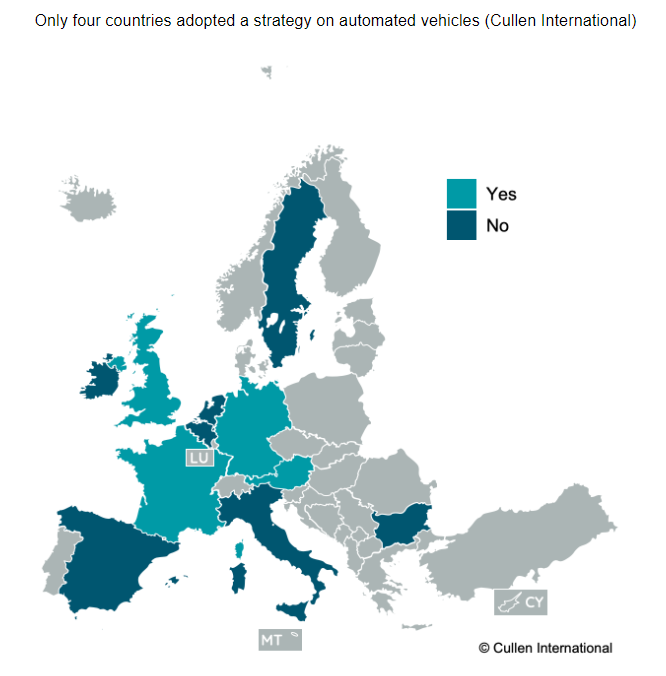
In addition, the research shows that, of the eleven countries researched, civil liability regimes for testing or full deployment of automated vehicles exist only in Italy, Spain and UK. View overview
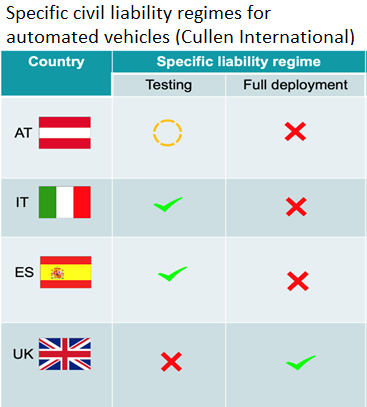
To access the full benchmark, please click on “Access the full content” - or on “Request Access”, in case you are not subscribed to our European Digital Economy service.
more news
18 June 26
[INFOGRAPHIC] Cullen Cheat Sheet: M&A wave in Latin America’s telecoms sector
This Cullen International infographic highlights the key M&A transactions in the LATAM telecoms market in the last few years.
15 June 26
Global trends in regulating cross-border personal data transfers
Our latest Global Trends benchmark compares key aspects of the regulation of cross-border personal data transfers across 14 jurisdictions worldwide.
12 June 26
Status of national AI laws across Europe
Our new benchmark tracks national laws implementing the AI Act, looking into the procedure for adoption and the core provisions.